
Mobility Innovation: Shaping the Future of How We Move and Live
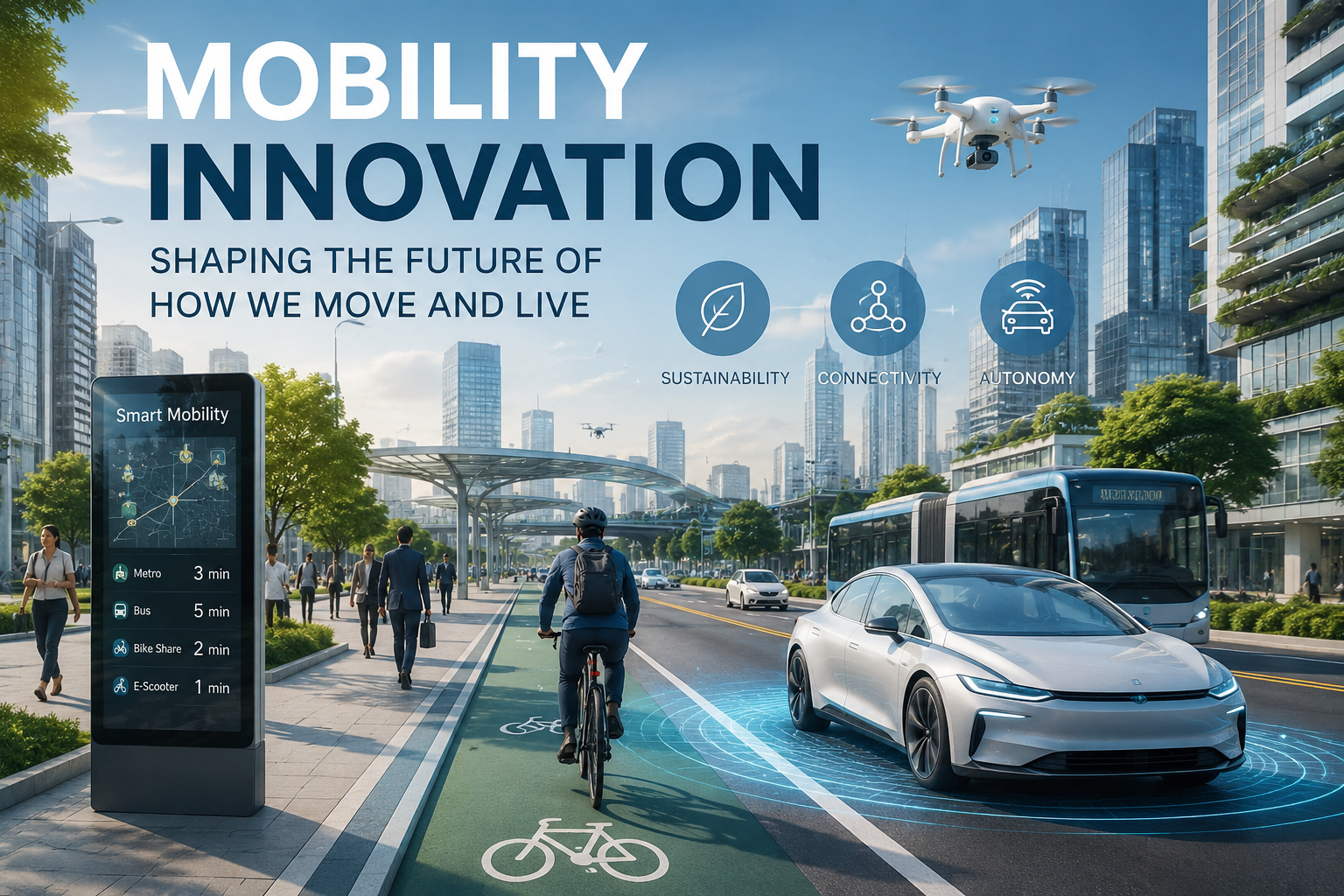
Mobility innovation is reshaping the way people move through cities, connect across regions, and experience daily life. From electric transportation to intelligent traffic systems, the evolution of mobility is driven by the need for efficiency, sustainability, and accessibility. What once relied heavily on traditional fuel and rigid infrastructure is now transitioning into flexible, data driven ecosystems that respond in real time to human behavior and environmental demands. This transformation is not only about vehicles but also about reimagining entire transport networks to better serve growing urban populations.
One of the most visible shifts in mobility innovation is the rise of electric vehicles and cleaner energy solutions. Governments and private companies are investing heavily in reducing carbon emissions, leading to widespread adoption of electric cars, buses, and even two wheel transport options. Charging infrastructure is expanding rapidly, making it more convenient for users to transition away from fossil fuels. At the same time, advancements in battery technology are improving range, reducing charging time, and making electric mobility more practical for everyday use. These developments signal a broader commitment to sustainability while also redefining performance standards in transportation.
Another key development is the integration of smart technology into mobility systems. Artificial intelligence, sensors, and real time data analytics are being used to optimize traffic flow, reduce congestion, and enhance safety on roads. Autonomous driving technology continues to evolve, with vehicles becoming increasingly capable of navigating complex environments with minimal human intervention. Public transportation systems are also being modernized, with apps that provide live tracking, automated ticketing, and predictive scheduling. These innovations create a more seamless travel experience and encourage greater use of shared transportation options.
Urban mobility is also being transformed through micro mobility solutions such as electric scooters, bicycles, and compact shared vehicles. These options address the first mile and last mile challenge, allowing commuters to move efficiently between home, transit stations, and workplaces. Cities are redesigning infrastructure to accommodate these new forms of transport by adding bike lanes, pedestrian friendly zones, and dedicated micro mobility pathways. This shift not only improves convenience but also supports healthier and more sustainable urban living.
As mobility innovation continues to advance, the focus is increasingly on inclusivity and long term resilience. Future transport systems aim to serve people of all ages and abilities while adapting to environmental challenges such as climate change and urban overcrowding. The convergence of technology, sustainability, and human centered design is shaping a future where mobility is not just about movement but about improving quality of life. In this evolving landscape, the journey is becoming just as important as the destination, redefining how society connects, grows, and moves forward.
One of the most visible shifts in mobility innovation is the rise of electric vehicles and cleaner energy solutions. Governments and private companies are investing heavily in reducing carbon emissions, leading to widespread adoption of electric cars, buses, and even two wheel transport options. Charging infrastructure is expanding rapidly, making it more convenient for users to transition away from fossil fuels. At the same time, advancements in battery technology are improving range, reducing charging time, and making electric mobility more practical for everyday use. These developments signal a broader commitment to sustainability while also redefining performance standards in transportation.
Another key development is the integration of smart technology into mobility systems. Artificial intelligence, sensors, and real time data analytics are being used to optimize traffic flow, reduce congestion, and enhance safety on roads. Autonomous driving technology continues to evolve, with vehicles becoming increasingly capable of navigating complex environments with minimal human intervention. Public transportation systems are also being modernized, with apps that provide live tracking, automated ticketing, and predictive scheduling. These innovations create a more seamless travel experience and encourage greater use of shared transportation options.
Urban mobility is also being transformed through micro mobility solutions such as electric scooters, bicycles, and compact shared vehicles. These options address the first mile and last mile challenge, allowing commuters to move efficiently between home, transit stations, and workplaces. Cities are redesigning infrastructure to accommodate these new forms of transport by adding bike lanes, pedestrian friendly zones, and dedicated micro mobility pathways. This shift not only improves convenience but also supports healthier and more sustainable urban living.
As mobility innovation continues to advance, the focus is increasingly on inclusivity and long term resilience. Future transport systems aim to serve people of all ages and abilities while adapting to environmental challenges such as climate change and urban overcrowding. The convergence of technology, sustainability, and human centered design is shaping a future where mobility is not just about movement but about improving quality of life. In this evolving landscape, the journey is becoming just as important as the destination, redefining how society connects, grows, and moves forward.

Need help? Talk to our expert.
Connect with a trusted agent who knows the market inside out - whether you’re buying or selling.