
Breaking Barriers: How Mobility Innovation is Reshaping Athletic Access
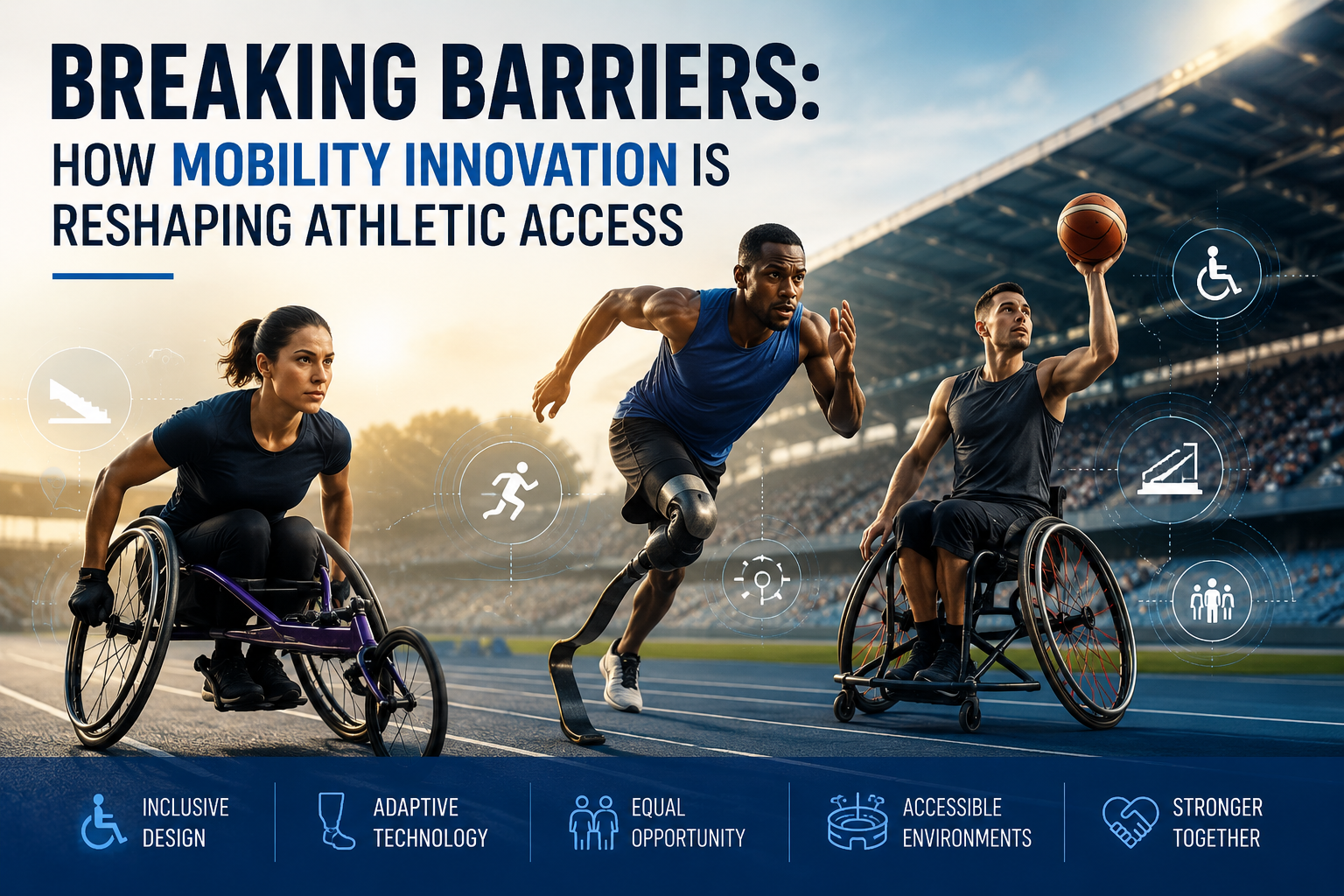
Accessibility in sports is no longer a peripheral concern. It is now a defining force reshaping how athletic spaces are designed, how competitions are structured, and how individuals with disabilities experience movement, performance, and belonging. Across global communities, the concept of mobility in sports has evolved from simple physical accommodation into a deeper movement toward equality, independence, and human-centered design. Today, accessibility is not just about entering a sports facility. It is about full participation, from training and competition to recreation and social engagement.
At the center of this transformation is the idea that mobility should never be a limitation to athletic participation. Traditionally, sports environments were designed with able-bodied users in mind, leaving individuals with mobility challenges dependent on modified or separate systems. This separation created not only physical barriers but also psychological and social gaps. However, advancements in universal design, adaptive technology, and inclusive policy frameworks are closing these gaps, allowing sports to become a shared space for all abilities.
Modern sports facilities are increasingly integrating accessibility from the ground up. Ramps, widened pathways, tactile flooring, and adaptive seating arrangements are now standard features in inclusive stadium design. Beyond infrastructure, digital mobility tools such as real-time navigation apps and accessible event platforms are improving how individuals with disabilities interact with sports environments. These systems allow users to plan routes, identify accessible entrances, and locate mobility-support services within large venues, enhancing independence and reducing reliance on assistance.
One of the most significant drivers of accessibility in sports is adaptive mobility equipment. Wheelchair sports, for example, have evolved dramatically with the development of lightweight materials, ergonomic design, and sport-specific engineering. Racing wheelchairs now feature aerodynamic frames designed for speed and stability, while basketball wheelchairs are built for agility, turning precision, and impact resistance. These innovations highlight how mobility technology is no longer simply compensatory but performance-enhancing.
Prosthetic technology has also played a major role in redefining athletic participation. Advanced prosthetic limbs designed for running, jumping, and cycling are enabling athletes with limb differences to compete at elite levels. Carbon fiber blades, microprocessor-controlled joints, and energy-return systems are examples of how engineering and biomechanics intersect to create high-performance mobility solutions. These devices do not just restore movement. They enhance it, allowing athletes to push beyond previous limitations.
Beyond equipment, accessibility in sports is deeply connected to policy and rights-based frameworks. Legislation such as disability rights laws and accessibility mandates ensures that sports organizations are accountable for providing equal opportunities. These policies influence everything from facility construction standards to funding for adaptive sports programs. However, enforcement and implementation remain inconsistent across regions, highlighting the need for continued advocacy and investment in inclusive infrastructure.
Social inclusion is another critical dimension of accessibility in sports. Participation in physical activity is not only about physical movement but also about belonging to a community. Inclusive sports programs that integrate athletes with and without disabilities help break down stereotypes and foster mutual understanding. Unified sports leagues, adaptive fitness classes, and community recreation programs are increasingly becoming platforms for social integration, where mobility differences are normalized rather than isolated.
Technology continues to accelerate accessibility in powerful ways. Artificial intelligence is being used to analyze movement patterns and optimize training programs for athletes with mobility impairments. Wearable sensors track performance metrics such as balance, speed, and endurance, allowing for personalized coaching and injury prevention. Virtual reality is also emerging as a tool for training and rehabilitation, enabling athletes to simulate sports environments regardless of physical constraints. These innovations expand the definition of mobility beyond physical movement into digital and assisted experiences.
Despite these advancements, challenges remain. Accessibility in sports is still unevenly distributed, particularly in low-resource regions where funding and infrastructure are limited. Many facilities continue to lack basic mobility accommodations, and adaptive sports programs often rely on external sponsorships or non-profit initiatives. Additionally, the cost of advanced adaptive equipment can be prohibitively high, limiting access for many individuals who could benefit from it.
However, the momentum toward inclusive sports design is growing. Governments, private organizations, and advocacy groups are increasingly collaborating to prioritize mobility access in sports planning. The shift is not only structural but cultural. There is a growing recognition that sports are a universal human experience, and mobility should never determine who gets to participate.
Ultimately, accessibility in sports is about redefining possibility. It is about transforming environments so that movement is not restricted by physical ability but supported by innovation, design, and inclusive thinking. As mobility technology continues to evolve, the future of sports points toward a world where every individual, regardless of physical condition, has the opportunity to compete, play, and belong.

Need help? Talk to our expert.
Connect with a trusted agent who knows the market inside out - whether you’re buying or selling.